What is Blockchain and How is it Transforming the Digital World?
Learn what blockchain technology is, how it works, and why it's transforming industries like finance, logistics, and digital identity. Discover its advantages, disadvantages, and the future it promises.
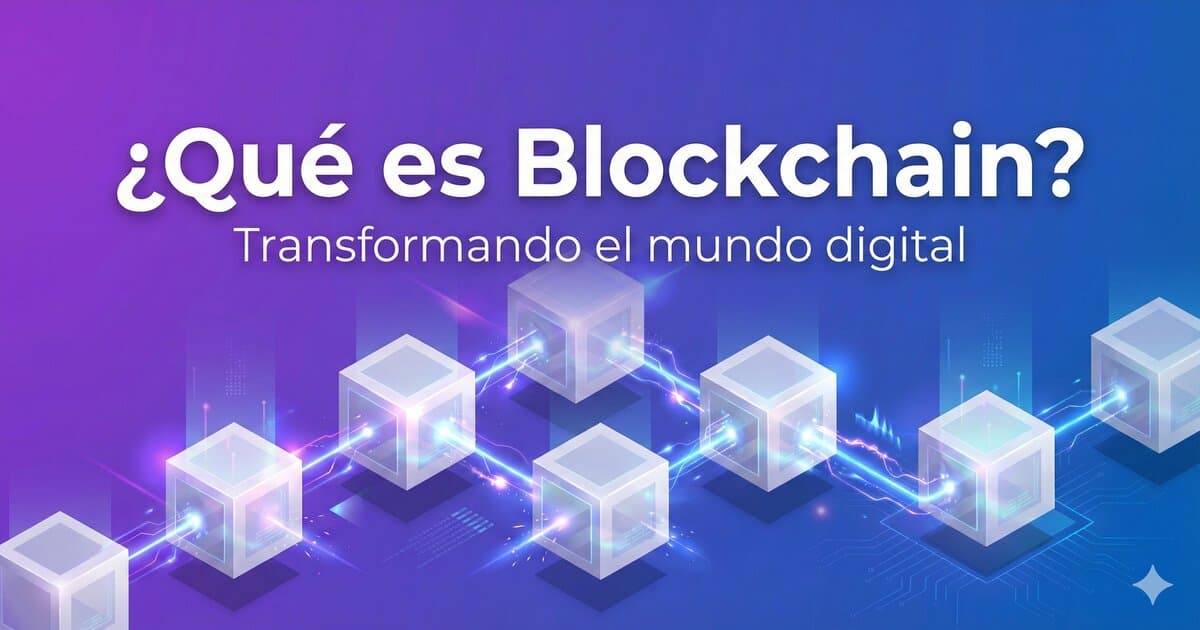
Blockchain technology has gone from being a technical curiosity to becoming one of the pillars of digital transformation. From cryptocurrencies to smart contracts, its impact extends across multiple industries. In this article, we explain what it is, how it works, and why it's so relevant today.
🧠 What is Blockchain?
Blockchain is a distributed and secure database that records information transparently and permanently. Instead of being stored on a single server, it's replicated across multiple nodes (computers) that validate and synchronize each change.
🧩 How Does It Work?
- Blocks: Information is grouped into blocks.
- Chain: Each block is connected to the previous one through a unique code (check out our how to launch a successful ICO for more information) (check out our ICO and crowdfunding for more information) (hash).
- Validation: Before being added, blocks must be validated by the network (by consensus).
- Immutability: Once recorded, the block cannot be modified without altering the entire chain.
🔐 Why Is It Secure?
- Decentralization: There is no single point of failure.
- Cryptography: Each block is protected by cryptographic algorithms.
- Transparency: All participants can see the complete history.
- Resistance to manipulation: Altering a block requires modifying all subsequent ones, which is practically impossible.
💰 Where Is Blockchain Used?
-
Cryptocurrencies
- Bitcoin, Ethereum, and other digital currencies operate on blockchain.
- They enable transactions without banks or intermediaries.
-
Smart Contracts
- Programs that execute automatically when conditions are met.
- Used in finance, insurance, gaming, and more.
-
NFTs (Non-Fungible Tokens)
- Represent unique digital ownership (art, music, virtual objects).
-
Logistics and Traceability
- Tracking products from origin to destination.
-
Digital Identity
- Control of personal data without depending on centralized platforms.
⚖️ Advantages and Disadvantages
Advantages:
- Security and transparency
- Elimination of intermediaries
- Traceability and trust
Disadvantages:
- Limited scalability
- Energy consumption (in some networks)
- Technical complexity
- Regulation still in development
🔮 What is the Future of Blockchain?
Blockchain is evolving towards faster, more sustainable, and accessible solutions. With the growth of Web3 (check out our Web3 and blockchain for more information), smart contracts, and decentralized finance (DeFi), this technology promises to change how we interact digitally.
📌 Conclusion
Blockchain is not just a trend: it's a technological revolution that redefines trust, ownership, and online collaboration. Understanding its fundamentals is key to participating in the digital future.
💬 Ready to get started?
Need help with your project? Schedule a free consultation and talk with our blockchain experts for your project.
Related Articles
- Web vs Web3 - Discover the differences between traditional web and Web3.
- ICO and Crowdfunding - Everything about ICO and crowdfunding for entrepreneurs.
- How to Launch a Successful ICO - Step-by-step guide to launch a successful ICO.
Need help with your project? Schedule a free consultation or explore our services.